[Warning: This is a ‘rantish wordy’ post,
not a ‘pictures with amusing captions’ post]
Earlier I wrote a quick post about some fundamentalist
loonies blaming demon sex as the cause of some people’s homosexuality. While I
think it is easy to dismiss these particular arguments as the unfounded and misguided
sputum that they are, it nevertheless got me thinking about how often demons
are genuinely invoked as having an effect on people in the real world.
Like many of the things that I object to in religious thinking,
the idea of demons as an explanation for any problems we have appears too easy
and convenient an answer. It seem to clearly human in its motivation. Sure this kind of
explanation may have held water when our species lived in the ignorance of the
Bronze Ages, much like how gods could be invoked to explain thunder; because we
didn’t know any better, and it was easier. These days however, relying
on such external agents as demons to explain away personal struggles and mental
problems is just a cop out.
You see this all the time when people talk about battling their
demons, whether it be in the form of alcoholism, depression, or any other
negative aspects of their lives. It is a handy way of making it seem like the
problem you are having isn’t something intrinsic to you, but rather something
happening to you. In this sense it isn’t your fault.
Doing this you effectively externalise your problems, and can even
further romanticise this by calling the process a struggle. It allows a certain
level of detachment from responsibility, and can also make the whole thing seem
less futile. To some, battling a demon is something that can be won, whereas
dealing with an inherent problem within yourself can seem like an impossible
task.
To a certain extent, these externalisations are not all bad
things; however I think this approach gets more wrong, than it does right. This
demopomorphising (can I copyright that term?) of ones problems can actually
make a lot of sense when you consider the fact that in many cases, these are
things that are simply beyond our control. We don’t choose to be depressed, nor
do we choose in the strictest sense to be alcoholics.
In many instances things like mental illnesses are a fact of life, and so they
can in effect take on the same attributes as some mysterious external force
acting upon us.
But I can’t help feel that it is much better to accept that these
forces which are external to us can nevertheless be contained entirely within
our physical body, and that they don’t require a supernatural explanation. Our
brain can work against us, without our consent, or knowledge, and bring about
conditions that affect who we are, without necessarily having to be considered
an intrinsic part of who we are.
Of course I realise that many instances of evoking demon battling
is done in a purely figurative manner. It is however important to realise that
a good deal of the public actually do believe in demons actively influencing people’s
lives in the literal sense. And there are the more amorphous concepts of demons
out there that others adopt.
A man I previously worked with surprised me one night by revealing
that he was a Buddhist. I had heard there were many around these days, but to
have a live one in front of me seemed like quite an occasion. Much like when I
manage to find a real Christian amongst the throng of unbelievers, and even though
I know that Australia is apparently rife with them, they so seldom make their
presence known.
Anyway, this real life Buddhist co-worker replied in the
affirmative when I asked him if he believed in demons, as I had heard many
Buddhists do. As I prepared to place my arguing hat on, and steeled myself for
a rhetorical battle to defend reason, I was slightly dismayed when he explained
that these demons weren’t supernatural beings. “It’s more like accepting that
alcoholism is something that can affect all our brains, it’s something that we
are all susceptible to. There are others too; other things which can
affect us negatively in similar ways. And these things are also like demons”
While this explanation doesn’t really sit quite well with me, it
was nevertheless a more rational response that I was used to hearing.
Fine, I suppose if you want to refer to these negative aspects of
the human condition as demons, I guess I can’t stop you.
But at the end of the day it still seems to me that to describe
these negative aspects of our lives as demons just adds unnecessary nomenclature
to the situations, which muddies up the waters. Similar to the folly of an
atheist talking of the soul, when
what they are really just referring to is their inner convictions or mind. Or
when people invoke the analogy of ones heart as the seat of their emotions,
rather than a muscle to pump blood. Just cut out the superfluous terms and
stick to more direct explanations, it often will not only lead to less
confusion, but also give a more accurate understanding of what is really at
play.
I think Douglas Adams made a fine point of it when he remarked on
one of his own mental quibbles, in this instance lacking confidence;
"I have terrible periods of lack of confidence [..] I briefly
did therapy, but after a while I realised it was like a farmer complaining
about the weather. You can't fix the weather – you just have to get on with it"
Mental problems are things to be dealt with as best we can. They
generally aren’t there due to any fault of the person in question, nor are they
there for some esoteric religious or mythological sense. They just are.
To try and pin meaning, or intent, onto the things that befall us
leads to confusion, halts any real and effective treatment, and places blame in
all the wrong places.
Of course this is all just my opinion, and I have absolutely no
grounding in any of the relevant sciences in order to make these statements
with even the ghost of authority (an I realise that I kind of ended up aiming
this rant in the direction of mental illnesses). But hell; isn’t this what the
internet is for?
Let me know your thoughts in the comments, particularly if anyone
out there has any actual expertise in this area (if this even is an area one
can be expert in).
Sometimes I hate the catchy brevity of news article headlines as they attempt to surmise their points in as few words as possible, often to the detriment of the English language. Other times however, I really enjoy the stark contrasts they can bring about. Take today’s article of interest for example:
“Christian group says demon sex makes you gay”
I love how simple it makes the whole prospect seem, and how well it highlights the inherent absurdity of the claim. Though perhaps I must also caution myself against forming an opinion too rashly; after all they might have some good points backing this claim up if one looks at their argument in its entirety.
Then there is the subheading:
“A Christian magazine warns that homosexuality is caused by sex with succubi -- and that's just the beginning”
I guess this could conceivably turn you off women...
Well I suppose I was right in that there is more to it,though I had hoped for something more than just specifying which type of non-existent being could turn your straight parts bent.
To be fair, the article I read was based on an article from a Christian magazine whose preface to the story in question began with the proposition “Can demons engage in sexual behaviors with humans?”. So at least they had the pretence of scepticism present (even if it is only in their headline).
The article quickly goes on to assert that yes these things can happen, and quote Contessa Adams, a former stripper and now minister, who herself battled with demons (literally, she would have us believe; not figuratively) which threatened to turn her into, of all things, a lesbian.
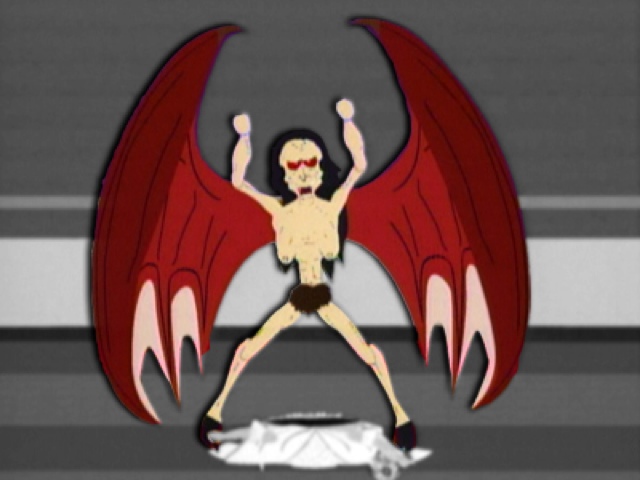
Admit it, after reading the name Contessa Adams, this is who you pictured
Indeed Contessa was once possessed by sexual demons (which apparently isn’t as fun as it sounds), and was quoted as saying “Anybody that has been attacked by them will tell you … they’re worried [that] they could not find that pleasure with mortal people,” If anything, it reminds me of the first season of True Blood, when we discover that not only are vampires real, but they are apparently adept at showing mortals quite a good time.
An actual billboard for true Blood in New Zealand. Sums up the show quite nicely.
Seriously though, it is worth noting that the group of extreme American Christians who believe in demons stalking the land to turn people homosexual are the same group that encourage and fund the current homicidal regime intention killing gays in Uganda.
Well what do you know, another month goes by, and another Republican
politician in the United States confounds the public with his views on rape.
Last time it was Todd Akin who showed his ignorance of human physiology when he
asserted that women physically cannot fall pregnant if it is ‘legitimate rape’,
which then has people wondering what the corollary to this term could possibly
be (illegitimate rape?). This time we have Richard Mourdock from Indiana, who dropped
this interesting quote during a debate:
“I struggled with it myself for a long time, but I came to realise that life is that gift from God, and I think even when life begins in that horrible situation of rape, that it is something God intended to happen.”
Mourdock is an anti-abortion candidate, which is an odd
enough concept that begs us to consider the converse side; a pro-abortion
candidate. But in this instance he was outlining why he believes that abortions
performed after rape should be outlawed, and the only time such procedures be
allowed is when the mother’s life is in jeopardy.
Now I find the abortion issue to be a contentious one at the
best of times, but moving past the inherent grey areas that this inevitably
invokes, I can’t help but think that the backlash faced by Mourdock because of
his words is a somewhat undeserved and hypocritical reaction by a lot of
people who would generally consider themselves a Christian.
Don’t get me wrong here; I think that the idea of a
divinely sanctioned rape reaches for the heights of absurdity. But that being
said, the view he is expressing is far from inconsistent with mainstream Christians
thought.
How many times, upon hearing some bad news, or even in
general discussions with Christians, do you hear the plan of a god invoked as
the ersatz explanation. We may find it hard to face the capricious nature of
things such as cancer striking down people seemingly at random, and thus hope
to find solace in some reason for this happening. But the fact of the matter is
that some things in this world are not only beyond our control, but also beyond
meaningful interpretation.
By this I mean that not everything has a purpose,
and though it might seem easier to bear the hand that life has dealt us if we
are willing to take on faith that everything has a purpose, this view not only
has the bulk of history working against it (why I ask you wasthe
holocaust necessary?), but it also
has a lot of dangerous implications.
If you do take the view that a god does have a plan, and
that we are all slowly meandering through life on paths set in advance by the
almighty, then you have to accept the full implications of this position. If
there is a plan, then things such as rape, cancer, murder, the holocaust and so
on; all these things must be a part of this plan. After all, if they weren’t a
part of the plan, then surely they would have had a massive butterfly effect on
things by now.
Not only do I find the divine plan way of thinking unsatisfactory,
and uncaring, but I also see the inherent dangers in living your life on what
is essentially an amusement park ride; where you have no control, and are just
along for the trip.
Something that can be used to retroactively permit and
explain any action can also be used in the present to justify any future
actions. This is where the danger lies. Accepting things that have happened as
a part of a god’s plan strips you of any responsibility of your own; it leads
to fatalism, and to an acceptance of whatever situations arise.
The idea of a divine plan is untenable at the best of times,
and dangerous at the worst. It can offer consolation, but as we have seen in
the case of Mr Mourdock, it can also offer a twisted sense of justification and
acceptance after the fact.
Let me know what you think in the comments, especially if
you are a Christian (or otherwise) who hold to the view that everything happens
for a reason.
Some of you may remember this little meme from a previous post of mine that found its way astonishingly quickly onto the internet after the Dawkins/Pell ‘debate’ on the cusp of this year’s Global Atheist Convention.
[Before I go on here, just a quick note to point out that though I previously indicated my mate Sam Dekok as the originator of this meme, he was merely an agent through which this cultural gene proliferated. Considering the furore created by these thin skinned, lawyered up believers, I thought it might be worth mentioning on here.]
I am reiterating this because apparently the innocuous piece of photoshop didn’t escape the attention of Mr Pell, who promptly threatened to sue Twitter for defamation and loss of reputation, after comedian Catherine Deveny tweeted a link to the 'offending' image. As if his own performance on the night, whether it be questioning the intellectual capacity of ancient Jews, or stating that man evolved from Neanderthals, didn’t do more harm to his reputation.
Now my opinion of people hiding behind the ability to take offense at anything they are opposed to has been well documented on here, but I couldn't help writing a quick rant in response to this.
The theory behind Pell's litigious paroxysm is that the aforementioned image suggested either that Pell was a paedophile himself, or that he was complicit in the sexual abuse of children. One would think that given the state of affairs in the Catholic Church at the moment, Pell’s mere mention of involvement with children is suspect enough, and that any overt suggestions of a link, are only there to highlight the preexisting connection between the Catholic Church and child abuse.
Perhaps it is worth noting here that I am not insinuating that all Catholic clergy are latent abusers; I am just pointing out that the link between Catholic Clergy and the abuse (let’s call it what it is; rape) of children is so ingrained in the public conscious to the point that one hardly needs to remind people explicitly of this connection.
But you have to wonder how it could get to the point where one party can be threatened with legal action simply for redistributing something that another party said, regardless of if it was a mere snippet of the original, and could be taken out of context.
I mean, wouldn’t the joke work pretty much the same even if the ‘for communion’ kicker were thrown in? After all, the joke does not rely on the omission of the communion part of the anecdote in order to get its laughs. Rather it simply rests upon the dubious notion of Catholic priests ‘preparing’ children in any circumstances. The verb ‘prepare’ is not where the negative association lies, nor would the supposedly slanderous implications inherent in this half quote somehow be negated by the addition of the boys being prepared ‘for communion’. Instead, the Catholic Church takes the brunt of the irony in this situation, as the unfortunate state of affairs at the moment mean that the mere mention of Catholic clergy, in particular around children, inevitably brings about the notion of abuse.
And with good reason.
If Pell and his cronies don’t want to have their religion and its employees associated with such slanderous possibilities, then perhaps they should reconsider policies that have not only helped to cover up abuse in the past, but which also facilitate further abuse and the circumvention of justice, by knowingly ferrying rapists across the country.
Just a quick rant tonight.
MM
I have been away for the
Easter holidays (which in some part explains my lack of blogging lately), but
was delighted to find that as I came home Monday night, there was to be a
televised sparring between the venerable Richard Dawkins, and the........ well,
and George Pell.
It is always great to see
Dawkins on the fly. So often news reports depict him as a militant atheist, who
is rude, or arrogant, and attacks religious belief with wanton disregard. Then
when I watch his appearances, I am always reminded of just how polite and
British the man is. His worst retorts after all are generally along the lines
of an Oxfordian “utter nonsense”, or “patently absurd”.
If this is considered the
epitome of a rude atheist, then I must be a positively abhorrent one.
During the show I was
surprised at how flimsy Pell arguments were. No doubt I was always going to
come out in support of Dawkins, but I had expected there to be more formidable
arguments either for religious belief, or else against atheism. Yet I found
myself being able to predict the weak arguments before they were pulled out of
what must be quite a tattered bag of apologist tropes.
Hitler was an atheist, or
social Darwinist; therefore evolution can’t be a good thing. We evolved from
Neanderthals. If there were no justice after death, that would be very nice,
therefore, there must be. Darwin was a theist. And so on.
All in all I had a great
time watching the show, and though I had promised myself that I wouldn’t go
into a twitter overload, I ended up tweeting around 22 times during the
fifty-odd minute show. Not too bad an outcome though, as I managed to get one
of my tweets up on screen to be seen by 863,000 Australians, which is
around 4% of the population, so I am happy with that. It also got me a sizable
new chunk of followers on twitter, and it is always nice to know that your
crazy twitter rants are appreciated.
Then as I decided to
write a blog on this episode of Q&A, I quickly found my initial thoughts on
the program spiralling out of control into an almost blow by blow account of
the interaction. So rather than make this solely a reflective piece, I have
decided to make it a sort of running commentary of my favourite bits of the
night, supplemented with quotes from the transcript.
This ended up running
into around five thousand words (I remember uni days when such a word count
would have killed me), but I hope it is somewhat entertaining for those of you
who watched the show, and perhaps even those who missed it. So yes it is rather longer than my usual posts, and doesn't have as many interesting pictures to look at, but it is just a culmination of a lot of stuff i wanted to get off my chest after watching the show.
Here goes.
The first question was
quite a stock standard one, regarding whether or not an atheist can essentially
be a good person. It is one often brought out in these debates, but also one
that most people know the answer to from either side; yes, but with some
conditions.
Dawkins points his
response that “it is true that
Christianity has adopted many of the best values of humanity but they don't
belong to Christianity or any other religion”, and goes on to point out the
bad things espoused in the Bible, both New Testament and Old. Then Pell
counters with a quote which seems to me a bit too understanding of
Christianity’s nature as a created religion, not a metaphysical truth:
“We’re Christians, we're New Testament
people. There was an evolution in the Old Testament. There are some awful
things there. It developed. The notion of God was purified as it went through
the Old Testament.”
It seems odd for him to
be talking of the notion of God changing, and of parts of the Bibles teachings
being awful.
Now on to audience question
number two, where things start to get moving along quicker:
“Religion is precisely often blamed for
being the root of war and conflict but what about all the good it has done for
society. God-centred religion has been the birth place of schools,
universities, hospitals and countless developments in science. Richard, if you
believe the human drive to seek the truth and to constantly improve ourselves
is merely a mechanism for survival, then what’s the point and why should I
bother? ”
This second question was
a bit all over the place. First it is talking about remembering all the good
things that religion has done rather than focusing on the bad things, then
after simply stating that as if it should be a powerful point, the questioner
quickly darts aside and asks ‘what’s the point’ if we are products of
evolution.
I mean, perhaps a
pertinent question, but where is the lead up, and what’s more; where is the
alternative? It is all well and good to say, ‘what is the point if we are the
product of evolution’, but perhaps if you are arguing for religion as the
alternative, you should at least offer a reason why us originating from a god’s
creation would imbue us with any more purpose, beyond that of merely being
created by a god.
As Dawkins said “We have to find our own purposes in life,
which are not derived directly from our scientific history”, which I agree
with completely because I think that any purpose we want to derive for
ourselves should depend on our own qualities and attributes, not just our physical
origins.
Pell isn’t brought into
the debate here, which was a pity if we wanted to hear an alternative purpose
of life. But nonetheless, the third question quickly followed as a bit of an
extension of this:
“Okay, my question for you today is:
without religion, where is the basis of our values and in time, will we perhaps
revert back to Darwin's idea of survival of the fittest? ”
Having read a lot of
Dawkins writings, I knew he would have an answer for this which really seems
like common sense to anyone who understands science’s place in our lives. That
answer is simply that Darwinian principles explain how we got here; they are a
physical law and shouldn’t be used to determine how we run our society any more
than the theory of gravity should. Dawkins says this, and states emphatically
that he would definitely not like to live by Darwinian principles.
The discussion then went
towards science, and how it can tell us about why we are here. Pell, being a
self stylised authority on why we are here, leapt on this chance, which lead to
this little exchange:
GEORGE PELL: Well, it’s interest because I
think in the space of about two minutes, Richard has said two different things,
one of which is that science can't tell us why we're here and then in the next
minute, trying to say that it does.
RICHARD DAWKINS: No. No. I said it can tell us why we're here.
GEORGE PELL: It can't.
RICHARD DAWKINS: Well, I simply contradict you in that case.
Here we begin to see the
germ of a core misunderstanding between Pell and Dawkins as one talks about why
we are here in a sense of ‘what is our purpose’, and the other talks about why
we are here in a sense of ‘what caused us to be’.
Dawkins put it nicely,
and with his trademark scientific air:
“Why we exist, you're playing with the word
“why” there. Science is working on the problem of the antecedent factors that
lead to our existence. Now, “why” in any further sense than that, why in the
sense of purpose is, in my opinion, not a meaningful question. You cannot ask a
question like “Why do mountains exist?” as though mountains have some kind of
purpose. What you can say is what are the causal factors that lead to the
existence of mountains and the same with life and the same with the universe.”
This is the age old ‘science
can answer how, but not why’ argument, where those in favour of this rhetorical
side step fail to elucidate why there must be a why, as opposed to simply just a how.
Then, at around the 9
minute mark I believe it was, Pell proved himself to be quite a premature
invoker of Godwin’s Law when he took what is considered a fatal step in
internet arguments, and committed a Redictio Ad Hitlerum:
“[...] it’s not Maggie Thatcher who was in
the epitome or the personification of social Darwinism. It’s Hitler and
Stalin. [........] Because it is the struggle for survival, the strong
take what they can and the weak give what they must and there is nothing to
restrain them and we have seen that in the two great atheist movements of the
last century.”
Not only is this a
premature appeal to Hitler, but also the classic mistake of counting him, and
his Nazi cronies, as vanguards for atheism. Dawkins of course being a veteran
of these unctuous arguments was quick to label this as ridiculous and again pointed
out that:
“That’s exactly why I said that I despise
Darwinian natural selection as a motto for how we should live. I tried to say
we should not live by Darwinian principles but Darwinian principles explain how
we got here and why we exist in the scientific sense”
At this point we reach
the first of a few instances where a group of the audience flat out laughed at sporadic
points during Dawkins explanations, to which he would ask the audience ‘Why is
that funny?’ but never got a direct response. The laughter in this case was
caused by the statement from Dawkins:
“Now, Cardinal, you said it’s part of human
nature to want to ask the question why in the sense of purpose. It may very
well be part of human nature but that doesn't make it a valid question.”
They laughed, Dawkins
asked why, but I don’t think he got a response.
As this went further, and
Dawkins further explained why he believes that a question like “What is the
purpose of the universe?” is a silly question, Pell interjected to say “I think it’s a very poignant and real
question to ask, “Why is there suffering?””.
Well it may be poignant,
and real; but it has nothing to do with the question they were talking about!
On talking about
suffering Dawkins later pointed out that “it
is a natural part of the living condition. It is a natural part of Darwinian
natural selection, which is one of the reasons why I was so keen to say that I
didn't want to live by Darwinian principles.”
Again a clear explanation
of what he believes to be the place of science and evolution in human affairs,
but one which is constantly ignored by his detractors.
Next a question was
directed toward Dawkins about his use of the label ‘atheist’ despite the fact
that he has self-identified as being an agnostic in the past. Even Tony Jones
seemed uncharacteristically uninformed about this distinction, but Dawkins
seemed to explain it rather succinctly (with examples from his book The God
Delusion), and a nice reference to the Easter season we find ourselves in:
“I live my life as though there is no God
but any scientist of any sense will not say that they positively can disprove
the existence of anything. I cannot disprove the existence of the Easter Bunny
and so I am agnostic about the Easter Bunny. It’s in the same respect that I am
agnostic about God”
Though I was happy to see
the whole agnostic/atheist thing brought up with regard to Dawkins beliefs, I
couldn’t help but think it could have been handled a bit better. I am of the
ilk that describes ourselves as agnostic-atheists; we don’t believe in god, but
we also don’t claim to know that there is no god. The label agnostic can be
applied to any number of propositions, as Dawkins points out, as it deals with
claims of knowledge. Atheist however can only be applied to one proposition, namely
ones beliefs regarding deities. It deals only with these beliefs, and not the
nature of whether or not the validity of such beliefs can be known with
absolute certainty.
It is in this way that I
think it is pertinent that we use the label atheist to describe ourselves,
rather than just agnostic, as it gives a true indication of what our beliefs
are, not just how certain we can claim to be regarding them.
The discussion then went
towards what proofs would sway Dawkins mind, to which he had no direct answer,
and was open in admitting this and the questions tricky nature. Tony then asked
Pell whether he would be able to provide Dawkins with some of the proof he
would require, to which Pell replied:
“No, because I think he only accepts proof
that is rooted in sense experience. In other words he excludes the world of
metaphysics, say the principle of contradiction, and he excludes the
possibility of arguments that don't go against reason but go beyond it.”
Arguments that go beyond
reason....... I don’t know what to make of this.
Tony then presses Pell a
bit further with a great question regarding why this god would choose a small
group of Jews 2,000 years ago, and make no subsequent proof after that. George
Pell then digs himself a nice little hole to sit in when he remarked that the
Jews were intellectual inferiors to their contemporaries, which led to a bit of
ribbing by the host:
GEORGE PELL: They weren't intellectually
the equal of either the Egyptians or the...
TONY JONES: Intellectually?
GEORGE PELL: Intellectually, morally...
TONY JONES: How can you know intellectually?
GEORGE PELL: Because you see the fruits of their civilisation. Egypt was the
great power for thousands of years before Christianity. Persia was a great
power, Caldia. The poor - the little Jewish people, they were originally
shepherds. They were stuck. They’re still stuck between these great powers.
TONY JONES: But that’s not a reflection of your intellectual capacity, is it,
whether or not you're a shepherd?
GEORGE PELL: Well, no it’s not but it is a recognition it is a reflection of
your intellectual development, be it like many, many people are very, very
clever and not highly intellectual but my point is...
TONY JONES: I’m sorry, can I just interrupt? Are you including Jesus in that,
who was obviously Jewish and was of that community?
GEORGE PELL: Exactly.
TONY JONES: So intellectually not up to it?
The next viewer question
was my favourite, so I shall show it in its entirety, as well as link to it:
“Question for Richard Dawkins. The big
bangers believe that once there was nothing, then suddenly, poof, the universe
was created from a big bang. If I have nothing in the palm of my hand, close my
fingers, speak the word bang, then open my fingers again, still I find there is
nothing there. I ask you to explain to us in layman's terms how it is that
something as enormous at the universes came from nothing? ”
First of all, Big
Bangers; I love this label.
I like his little
experiment, and the challenge he puts forth as if he has shook the foundations
of the Big Bang theory, but at the end of the day this guys argument about
closing and opening his hand is as laughable as the old ‘Peanut butter proves
that there can be no abiogenesis’ argument.
I still cant believe this guy is serious.....
I also have to ponder why
it is he thinks that the enormity of the universe would impact on its ability
to come from nothing. This is particularly important to note as after all, the
Big Bang theory tells us that the universe was once super condensed, and as
such was not all that enormous (though still contained all the energy/mater we
have today apparently).
People want a simple
answer for the beginning of the universe, and then balk at the mention of
anything that might sound a bit beyond their understanding. If an answer cannot
be understood by them intuitively, then they don’t believe it has any weight as
an explanation, This may well be a good argument if you think you live in a
world where such explanation usually are intuitive. But talk to any physicist
and you will soon find that much of the way the world works isn’t intuitive;
just Google quantum mechanics and you will see how far the rabbit hole goes.
When the discussion
continues and talk of new theories regarding the appearance of the
universe gets moving, Pell attacks some of Dawkins arguments, and invokes what
must be one of the biggest cop out arguments in the arsenal of the Christian
apologist:
“he dumbs down God and he soups up nothing.
He continually talks as though God is some sort of upmarket figure within space
and time”
‘Within Space and time’
is the important part there. You will constantly hear people saying that their
god is outside of space and time, and thus not subject to its ways, but you
never hear an explanation of what this means, and how it can be reconciled with
other forms of thinking prevalent in their theology. For instance, if this god
is outside of space and time, how can he create a universe? The very act of
creation requires time to already exist, after all you can’t have a ‘before and
after’ the universe, without having time. And you can’t have a universe,
without having space-time.
Regarding the outside of
space and time excuse, Dawkins replied:
“it is no good invoking Thomas Aquinis and
saying that God is defined as outside time and space. That’s just a cop out.”
FYI, I didn’t realise
Dawkins phrased this almost exactly as I did above, but I am nonetheless pleased
by it.
I think some more direct
audience participation with Dawkins would have been good. After all, so many
times when the audience laughed at something he said, Dawkins wanted to know why
it was funny, but received no explanation. It made him seem more offended by
their laughter rather than genuinely curious and ready to engage, as I believe
he was.
This second bit of
audience participation was spurred on by this remark:
RICHARD DAWKINS: You can dispute exactly
what is meant by nothing but whatever it is it’s very, very simple.
(AUDIENCE LAUGH)
RICHARD DAWKINS: Why is that funny?
GEORGE PELL: Well, I think it’s a bit funny
to be trying to define nothing.
Of course you do George,
because you are not a philosopher or a scientist, so you don’t have to define
or describe things; you are a theologian, and as such simply have to interpret
things within your own stationary worldview. The Cardinal talks as if
definitions in a philosophical or rational debate aren’t worth ruminating over.
The audience members who
were snickered here no doubt consider such things equally absurd, because like
most philosophical debates worth having, there is an instinctive answer that
some are just willing to accept. We think it is silly to try and define
nothing, because we have our own understanding of the word built up since we
were a child. Much like if people are asked to define what happy is, or sad,
they will probably shy from the task, because rather than question their own
personal understanding of the concepts, it is easier to treat them as
self-evident truths and be done with it. Perhaps more pragmatic, but by no
means philosophically satisfying.
Next came one of Pell’s
biggest slip-ups which unfortunately I believe wasn’t properly debunked. That
is Pell’s insistence that Charles Darwin was a theist.
The exchange went like
this:
GEORGE PELL: Darwin was a theist because he
said he couldn’t believe that the immense cosmos and all the beautiful things
in the world came about either by chance or out of necessity. He said, “I have
to be ranked as a theist.
RICHARD DAWKINS: That just not true.
GEORGE PELL: Excuse me it’s...
RICHARD DAWKINS: It’s just plain not true.
GEORGE PELL: It’s on page 92 of his auto
biography. Go and have a look.
Dawkins displays his
incredulity at this falsehood, but as the discussion is quickly moved along by
Jones; there is no real room for rebuttal. But there is room on this blog for
all manner of things I would wish to rant about, and so here I shall!
In a sense Pell is right
about Darwin having been a theist, however not in the sense he actually wants
people to believe. Darwin was a
theist, much like he was a baby: but
then he grew up. He was a theist, but then he lost this faith, and the quote in
his autobiography as reference by George was clearly talking about beliefs
Darwin had had, not ones he maintained at the time of writing. In fact if he
had only read a few pages further, to page
94, he would have read Darwin affirming himself as an agnostic, and then elucidating
just how one can go about living according to this, without recourse for a god
to explain things.
The night of the show I
looked up page 92 of his autobiography and got a nice link to Darwin’s online
writings. However if you search for a similar thing today, you will find links
to heaps of blogs discussing the very thing I am discussing now; the use of
this by Pell on Q&A. The misinformation patrols are quick at work for our
religious friends however, as one Catholic site is already exclaiming “Cardinal Pell shows up Richard
Dawkins ignorance about Charles Darwin”.
Then, having failed to
understand the history of Darwin’s religious beliefs despite the fact that he
was claiming to have read his autobiography (which is a nice read and like all of Darwin's work, available for free online), Pell exposed his lack of
understanding with regard to mankind’s evolutionary history with this startling
exchange, which seemed to enliven Dawkins from his jetlag:
TONY JONES: Sorry, can I just bring you, in
a sense, to the point of the question? Do you accept that humans evolved from
apes?
GEORGE PELL: Yeah, probably. From
Neanderthals, yes. Whether...
RICHARD DAWKINS: From Neanderthals?
GEORGE PELL: Probably.
RICHARD DAWKINS: Why from Neanderthals?
GEORGE PELL: Well, who else would you
suggest?
RICHARD DAWKINS: Neanderthals were our
cousins. We’re not descended from them and we’re both descended from...
GEORGE PELL: These are extant cousins?
Where will I find a Neanderthal today if they're my cousins?
RICHARD DAWKINS: They’re not extant,
they’re extinct.
GEORGE PELL: Exactly. That’s my point.
RICHARD DAWKINS: Your point is that because
they're extinct they can't be our cousins?
GEORGE PELL: I really am not much fussed.
RICHARD DAWKINS: That’s very clear.
GEORGE PELL: Something in the evolutionary
story seems to have come before humans. A lot of people say it’s the
Neanderthal.
Sure perhaps it is a bit
much to attack the Bishop for this mistake; after all he has no expertise in
the matter whatsoever. But nevertheless, Pell should have just pushed it aside
by saying, ‘oh well, I don’t really know much about mans evolutionary history’,
rather than trying to argue about the relevance of this other species of human
being extant, or cousins. He even goes on to state how Neanderthals weren’t the
equivalent of humans because they didn’t draw on cave walls, even though there
is new
evidence that they in fact did do just that.
As the discussion
continued about mans evolution and the implications of this toward those religions
that believe man in unique and has a soul, I think there was further evidence showing
Pell’s ignorance of modern evolutionary theory. For example he shows a
misunderstanding of the continuous nature of species here:
“so we can't say exactly when there was a
first human but we have to say if there are humans there must have been a first
one”
There doesn’t have to be
a first human at all, just because there is a human now. There is gradual
change, so that no parent and offspring would be so dissimilar as to be
labelled members of different species, yet these gradual changes would nevertheless
compound over time to inevitably change the species (Dawkins in fact goes over
this briefly, but adroitly, in a later segment, to which Pell inanely replies “if
there is no first person we’re not humans”).
In talking about these
‘first people’ Pell made some headlines (virtual ones at least) in this article when he referred to Adam and Eve as mythology, and not fact.
When he started going
over this mythology, Pell highlighted one of the things that I believe is a
major difference between a theist’s mindset versus that of an atheist’s:
“[...] the key to the whole of universe,
the really significant thing, are humans”
A very self centred view
of the nature of existence I would think. What do you know, it is all about me
after all. It’s like Phillip J Fry once said: “So I really am important? How I
feel when I'm drunk is correct?“
“and, [...], it is a very sophisticated
mythology to try to explain the evil and suffering in the world.”
I will just say quickly
about the above that I don’t believe it is very sophisticated to assert that
sins can be inherited, and that people are born, as Hitchens used to quote "created
sick, commanded to be well”.
A while later when the
talk again moves towards Richard’s expertise in science my favourite moment of
the night appears. Take a look:
George
Pell: You have to reason about the facts of science, ask whether you
believe the suggestion that, you know, random selection is sufficient and also
most evolutionary biologists today don't believe that.
RICHARD DAWKINS: Don't believe what?
GEORGE PELL: They don't believe in random
so this crude fundamentalist version of random selection that you propose
RICHARD DAWKINS: I do not propose it and I
strongly deny that evolution is random selection. Evolution is non-random
selection. Non-random.
GEORGE PELL: So there is a purpose to it is
there?
RICHARD DAWKINS: No.
GEORGE PELL: Could you explain what non-random
means?
RICHARD DAWKINS: Yes, of course I could.
It’s my life's work!
I love it, especially because so many religious apologists
seem to forget that these scientists do have a whole lot of research behind
what they are doing, and unlike a lifetime built up on theological ideas, they
can explain them with due recourse to facts and observations. It just goes to
show how much of religious disapproval of evolutionary theory is based on an
unchanging image of the science as constructed by apologists, rather than an
active understanding of the theory. That evolution is still considered by many
who don’t understand it as a random process, is something which must infuriate
Dawkins, and other evolutionary biologists, to no end.
Dawkins great strength is
how he can explain something so well, in so few words. Take for example the explanation
of evolution’s non-random nature which he gives to Pell:
“There is random genetic variation and
non-random survival and non-random reproduction which is why, as the
generations go by, animals get better at doing what they do. That is
quintessentially non-random.”
Next, an atheist asks a
question about what will happen when he [the atheist] dies and we get a long
response from Pell (prodded by Tony of course) which goes into some of the
intricacies of the Christian mythology, but again I like the concise and
rational nature of Dawkins response:
“Well, the answer to the question of what’s
going to happen when we die depends on whether we're buried, cremated or give
our bodies to science.”
Bam, done.
As the discussion delved
into more Christian mythology, and Pell defended such things as bodily
resurrection and transubstantiation, he again hinted toward the mortal origins
of Christianity upon acknowledging the adoption of yet more Greek culture and
thinking into the Christian ethos:
“I understand it [edit: transubstantiation],
according to a system of metaphysics. It was spelled out by the Greeks before
Christ came, which we have adopted [......]”
Though I suppose it could
be said that the referrals back to a previous culture don’t just show the human
origins of religion, but rather that it may reflect a universal truth not quite
grasped correctly by the Greeks. But honestly; which is the simpler
explanation?
Dawkins calls out another
tricky tactic of the religious apologist when he continually tries to get Pell
to explain how some of the language he is using actually applies to real world
usage, and our way of employing the English language. When Pell tries to
explain how the wafer does become the body of Christ via transubstantiation,
but remains as a wafer for all intents and purposes, Dawkins retorts:
“I mean I use - English is my native
language. The wafer does not become the body of anybody in the English
language.”
However as Pell had
previously said:
“I believe it because I believe the man who
told us that was also the son of God. He says, “This is my body. This is my
blood,” and I’d much prefer to listen to him and take his word than yours.”
It is clear that a
rational discussion about language and how it should be employed (with common
definitions and syntax) is useless against someone who defines words by divine
fiat, not in any proper linguistic fashion.
Seeing that this
discussion was going nowhere, Tony interjected with a new, and refreshingly
brief, question from the audience:
“Is it okay to tell a child that God
doesn't exist? ”
This is one I have
thought about a lot as my son is growing up in a culture that frequently talks
of God, gods and heaven, albeit generally in a metaphorical or profane (“God
damn it!”) sense. Dawkins does well, saying that he would prefer for her to
figure it out based on the evidence [he has a great open letter to his
daughter, hence the ‘her’, that can be found over here]. After all, he is
an agnostic atheist, and would not be willing to tell his child that a god
doesn’t exist with 100% certainty anyhow.
Then when Pell was
starting his response to this question, he unintentionally got the biggest
laugh of the night with this statement, which were it not coming from a member
of the catholic church, would barely have registered a stifled giggle:
“I remember when I was in England we were
preparing some young English boys”
I smell a meme on the
way!
Thank you Sam Dekok for being so on the ball making this
Some people have said that it was a bit crass of Dawkins to
laugh when the audience took amusement from Pell reminiscing about ‘preparing’
some English boys, but I think that given the Catholic Church’s history in this
regard, it is hardly an unwarranted jest.
Then when the laughter
dies down, and he finally gets it out, Pell’s self styled ‘simple’ answer to
the question of whether kids should be told they are going to hell is this:
"Hitler. You think Hitler might be in
hell? Started the Second World War, caused the death of 50 million or would you
prefer a system where Hitler got away with it for free?"
Would you prefer it? As
if preference has a bearing upon reality. I am sure the kid would prefer a
universe where suffering such as the like committed by Hitler, was simply not
possible.
This personal drive for
justice to be handed out even after the grave is brought home when Jones
presses him further (as he is sooooo good at doing):
TONY JONES: What about a system where he
was obliterated and didn't exist anymore?
GEORGE PELL: Well, he would have got away with too much, as far as I am
concerned.
But Pell doesn’t give up,
he is determined to show that simply wanting the universe to be a preferable
and just one is somehow an argument for it actually being such a universe.
“But I believe on behalf of the innocent
victims in history that the scales of justice should work out. And if they
don't, life is radically unjust, the law of the jungle prevails.”
‘On behalf of the innocent
victims’, implicitly suggesting that those atheists who don’t believe there is
justice in the universe from some divine after death source, are somehow not on
the side of the victims.
True, a world where the Hitler’s and Mengele’s can simply
die and escape justice may not be a just world at all. However saying this
doesn’t really add weight to the argument to that your idea of what the world
could be like is nicer than an alternative, and therefore that it must be true.
I believe that the world is essentially an indifferent
place, which is why I don’t think that justice is something to be doled out
from beyond the grave, but rather that justice, like ethics and happiness; is
an entirely human affair.
Dawkins likewise is
having none of this, and simply responds to the question of which reality is
more preferential with this little nugget of rationality:
“I’m more interested, however, in what’s
true than in what I would like to be true.”
Any talk of suffering or
justice in regard to a religious worldview is bound to ask the question of why
an omnipotent god would allow such things to happen. Pell offers up the same
‘free will’ argument so often employed, yet very rarely explained:
“That’s a very good question but if God is
going to allow us to be good he’s got to give us freedom.”
Freedom perhaps, but
ability; no. We can easily be given the freedom to do things, without making
every possible action available to be done. For example, we have the ability to
kill, and maim; but is this physical reality required in order for our will to
be truly free? I don’t think so. We could have bodies incapable of feeling
pain, or being killed, whilst retaining our free will, so this reality still
needs to be accounted for.
As the night quickly came
to an end, I think Pell was beginning to lose interest in the whole affair. He
had shot himself in the foot a few times along the way, and then added this
nice snafu to the mix when talking about secondary causes in regard to how a perfect
god would design a just universe:
GEORGE PELL: It is interesting through
these secondary causes probably no people in history have been punished the way
the Germans were. It is a terrible mystery.
TONY JONES: There would be a very strong argument saying that the Jews of
Europe suffered worse than the Germans.
George Pell, you have
been Tony Jones’d.
As if that weren’t enough
to highlight Pell’s mounting disinterest in his side of the exchange, his final
words for the night consisted of this exchange:
GEORGE PELL: [...] my life would be much
simpler and much easier if I didn't have to go to bat for a number of Christian
principles.
TONY JONES: Have you ever regretted that you do?
GEORGE PELL: Sometimes I wonder.
TONY JONES: Seriously?
GEORGE PELL: No. No. No.
Ah yes, if only it was
the good old days, when Catholic Cardinals didn’t have to try and explain
themselves to the people, and could just force through their will with divine
right.
Anyhow, that is my
commentary on the Dawkins v Pell episode of Q and A. I hope it was enjoyable.
MM
Oh, and one quick last minute mention of another meme created after George Pell replied to a question about the existence of gays within his god's master plan in this exchange:
TONY JONES: Can I just interpose a quick question on this. We are running out of time. I mean do you believe that homosexuality, since it’s not a question of choice, is part of God's natural order? GEORGE PELL: Creation is messy. I think it’s the oriental carpet makers always leave a little flaw in their carpet because only God is perfect.
2010 marked the year of extensive lunar mapping thanks to the launch of
the Lunar
Reconnaissance Orbiter, and as a result scientists and regular science
loving people were quick to come out and use some of this new lunar photography
to thwart an old foe, stuck firmly in the popular imagination: the Moon
Landing Hoax conspiracy theory.
Back in September of last year images of the Apollo moon landing sites were released, which showed not only the remains left behind from the lunar landers,
but also the tracks left by the astronauts themselves (as the moon has no
atmosphere to disturb them after 40 odd years).
Then again last week another announcement was made which had one article boasting“refute this hoax lovers; more proof
men totally walked on the moon”. This was in response to more images made
public which show moonwalkers Pete Conrad and Alan Bean’s tracks from their sojourn
to the Surveyor 3 probe while on the moon as a part of the Apollo 12 mission.
Now I love science as much as the next guy, and yes if I meet someone
who entertains the idea of a moon landing hoax, I am quick to get an argument
going (if only a friendly one). But it seems a bit odd to be touting this new
evidence as being in any way convincing to those in the conspiracy theory camp. After all, they are willing to dismiss photos apparently taken on the
moon back in the 60’s-70’s; so why should we feel confident in debunking their
theories with photographs taken remotely? Not to mention the more important
fact that these new images were produced in the modern age of Photoshop and
computer generated imagery. If anything, the release of these images is
something that would have been long expected by any forward thinking hoax
claimer. Of course NASA and the shadowy government conspiracy (which
must be staffed with a lot of very old men these days) would have the ability
to fake photos from satellite; after all they even placed laser
reflectors on the moon to support their lie. I wouldn’t even be surprised if when future people return to the moon, and
the Chinese explorers there tour the remains of a once mighty America’s space
efforts, that there would be people who still maintained that the landing was a
fake, and any subsequent evidence was a party to this. This is always going to be the case, as with most conspiracy theories
there are pervasive elements at work that undermine our mental faculties. They
are driven by wants and desires; generally of the kind where we don’t want
something to be true. We don’t want to believe that an influential person like
JFK, who seemingly had such a steadfast place in history set out before him,
could be so easily taken from the world by the actions of a lone gunman. So we
push our reasoning slightly aside, and delve into the conspiracy theory box to
pull out something that agrees with how we want the world to be.
Doyle’s Sherlock Holmes once said “It is a capital mistake to theorize
before one has data. Insensibly one begins to twist facts to suit theories, instead
of theories to suit facts”, which seems to capture the general idea, except
that in this case the conspiracy theorist twists the facts to their theories
when the alternate theories seem too impalpable.
This abandonment of rational thinking is a dangerous thing, as once you get rid
of the tenets of evidence and logical thinking, you will find self referential
confirmation and verification all too easily. It reminds me of that other great conspiracy theory. The one that states
that after we die we don’t actually cease to exist, but rather there is some obscure
secondary existence awaiting us. Something that is hidden from the world as we
know it, but nonetheless must be out there, because if it wasn’t, then we would
have to live up to uncomfortable realities. And the best part about conspiracy theories (and yes, religions too), is
that it takes relatively little effort on our behalf in order to ascribe to them,
and reap the mental benefits of believing our world is just that little bit
better. It is easy to assert that man didn’t walk on the moon, as you don’t have
to give up anything, except perhaps the respect of a few more discerning
people. The problem with conspiracy theories, as with religion, is that you can
evoke your powerful external force in order to explain away any objections to
the theory. In the Moon Hoax example the external force is some form of
government body who are either working to keep the lie undercover, or else have
simply succeeded in their goal of fooling the world, and are now inactive.
In the case of most modern religions, the external force is much more
potent, as any god can generally be said to have controls over reality, and
thus any contrary evidence to the god’s theory can be explained away through
magic. This is akin to how people used to claim (and some still do today) that
the fossil record is a work of the devil, put there to fool man. The external
powerful force at work.
Clearly the work of the devil
Once you start entering in these agents with seemingly limitless
abilities, you can work your way around almost any rational argument, or
contrary evidence.
This is the crux of the Flying Spaghetti
Monster’s theology, where any experiment or evidence which appears
contradictory to the word of the Pastafarians only appears so due to the diligent
manipulations of ‘his noodly appendage’.
So in closing, though I like these new images being
produced from the Lunar Reconnaissance Orbiter, I don’t think it is wise to use
this evidence in an argument against conspiracy theorists. Their bag of magic
tricks can explain away anything that could be used as proof, especially now
that the thing we are talking about is set firmly in the past, and beyond
direct investigation.
Rant complete.
MM
P.b. (post bloggedum)
I also note that Russia has announced plans to get a cosmonaut to the moon by 2030. I guess second place in the space race is still quite an achievement, even if it would mark sixty years since the yanks beat them to it.
Then again, it might get crowded up there, what with the Chinese and Indians hoping to beat the Ruskies to it in 2025 and 2020 respectively.
First a quick
disclaimer. I understand this post is very U.S.-centric, and that it is mainly
about an American who we (hopefully) will never have to deal with in the
antipodes. But upon hearing some of the stuff I comment on below, I just couldn’t
help myself. The U.S. religious right are just so much more amusing than our
brand of Christian crazies over here. I am however open to any suggestions
people might have as to who I should turn my attentions to here in Australia,
but until then, enjoy:
Rick Santorum: 53 and still needs to label his cloths...
I was reading this
great article over at Al-Jazeera about the American presidential hopeful Rick
Santorum. It focuses particularly on his religious views, as he so often brings
them into not only his public life but also his official one, stating such things
as:
Comparing gay marriage, to beastiality;
“In every society, the definition of marriage has not ever
to my knowledge included homosexuality. That's not to pick on homosexuality.
It's not, you know, man on child, man on dog, or whatever the case may be. It
is one thing.”
Arguing for the state to be able to limit consensual sex (whether
it be gay or unmarried);
“The idea is that the state doesn't have rights to limit
individuals' wants and passions. I disagree with that. I think we absolutely
have rights because there are consequences to letting people live out whatever
wants or passions they desire. And we're seeing it in our society”
Claiming that Satan controls Academia, and has it bent for
evil;
“The place where he was, in my mind, the most successful,
and first successful, was in academia. He understood pride of smart people. He
attacked them at their weakest, that they were in fact smarter than everybody
else, and could come up with something new and different, pursue new truths,
deny the existence of truth, play with it, because they're smart. And so
academia, a long time ago, fell.”
And linking problems funding Social Security to the labour
loss from abortions;
“The reason Social Security is in big trouble is we don't
have enough workers to support the retirees. Well, a third of all the young
people in America are not in America today because of abortion, because one in
three pregnancies end in abortion.”
The man has a lot to say, and it’s pretty obvious where his
motivations come from.
Around about two thousand years ago it seems.
Needless to say, he is making good headway in the Republican
primaries despite originally polling as a third tier nominee, and this late
surge appears to be largely due to his conservatism; in particular his
conservative religious views. This piece by Paul Rosenberg takes to heart some
comments made by the former United States senator regarding the theology of
Obama, and how Rick questions the religion he follows (they are both
Christians, just different flavours). The author decided to turn Santorum’s inquisitional
spotlight back on him, and promptly tears him apart as not only a hypocrite,
but also a religiously motivated opportunist.
Anyhow for those interested in how the Republican race to
try for president is going, I recommend you read it, but for those less
interested, I will get to the true crux of this post.
The start of the article questions how much not only Rick
Santorum, but also the religious right in general, actually follow their
supposed religious principles. It uses the following quote from the Bible to
highlight the disparity present in a lot of this conservatively based religion
driven politics:
"And when thou prayest, thou shalt not be as the hypocrites are:
for they love to pray standing in the synagogues and in the corners of the
streets, that they may be seen of men. Verily I say unto you, They have their
reward. "But thou,
when thou prayest, enter into thy closet, and when thou hast shut thy door,
pray to thy Father which is in secret; and thy Father which seeth in secret
shall reward thee openly."- Matthew 6:5-6
That’s right; it appears that at least in this portion of
the Bible, Christians are implored to be modest and discrete in their prayers.
They are told to confine it to their personal life, and perhaps not try and
force it into schools for instance.
No doubt there are other sections of the Bible that take a
different tack, and advocate aggressive prosthelytising. But hey, that’s the up
side of having a religious text that was cobbled together over thousands of years,
by many authors; you are able to pick and choose so that you can take on
whatever contradictory views you like, and still feel a sense of divine
authorisation. Anyhow, that's was just a quick post to get me back into the swing of things after a long weekend of birthdays and buck's nights. Hope you enjoyed it, see you in the comments. MM